

Why this weekend exists

Cancer treatment ends and the hard part often begins. Hockey for Hope pays for the mental health care that comes after, for patients at the QEII who would otherwise cover it themselves.

Three players in Hockey for Hope jerseys standing together in the arena hallway

The founder

Shay Needham started this after her own diagnosis

In 2015, at 42, Shay Needham was diagnosed with lung neuroendocrine cancer. A tumour the size of a golf ball came out of her left lung in major surgery, followed by recovery and years of scans. Because the cancer was rare, people around her assumed the worst.

What followed was harder to see from the outside. Her work and personal life came apart in the same stretch, and she has described days when getting out of bed felt beyond her. Therapy, covered by her health insurance, is what turned it around.

That coverage is what most patients do not have. Shay built the tournament in 2023 to close the gap, naming the fund with her friends at Shay's Angels and running it through the QEII Foundation.
“We hear a lot about the physical effects of cancer treatments, but the social and emotional impacts can be just as daunting.”
Shay NeedhamFounder of Hockey for Hope

The mechanism

How a grant reaches a patient

Patients do not apply and do not need to make a case for themselves. Their care team does it, which is the part that matters most to people who are already exhausted.

A provider notices

A social worker, nurse navigator, chaplain or physician on the QEII cancer care team sees that a patient would benefit from support they cannot afford.

They apply

The provider applies to the fund on that patient's behalf for a grant of up to $1,000.

The QEII Foundation pays

Money moves through the Foundation to cover private counselling, massage therapy, acupuncture, or another service the care team recommends.

The patient gets care

No waiting list, no means test at the door, and no bill arriving later in the middle of treatment.

The fund runs out

Applications were paused in April 2025 because the money was gone. Every tournament refills it, and how far it stretches depends on what the weekend raises.

Year by year

The tournament has grown every year

Ten teams in the first year, twenty-four in 2025. The 2026 field is capped at twenty-four again, with a goal of $39,000.

Amounts raised for the mental health fund, by tournament year.
YearTeamsRaisedNote
202310$33,000Inaugural tournament
202416$39,000Fund reached 76 grants
202524$36,000+Sold out field
202624$39,000 goalRegistration open

76

Patients funded

Counted through spring 2025.

100%

Of proceeds to the fund

Tournament proceeds go to grants for QEII cancer patients.

Who it reaches

Three people the fund has paid for

“It helps you get through your treatments better and opens your eyes to how you can treat your body better.”
Hope SingerDiagnosed with leukemia on her high school graduation day. The fund covered six massage therapy treatments.
“This time, I've learned how important it is to talk about what you're going through.”
David FerrignoDiagnosed with stomach cancer in 2014 and sinus cancer later. He reached counselling through his patient navigator.
“Finances are a barrier. Everyone's mental health needs are different.”
Alyson CurrieSocial worker on the QEII psychosocial oncology team, who has applied for at least ten grants.

Who runs it

Shay's Angels, with the QEII Foundation

Shay's Angels is the volunteer group behind the weekend: Shay Needham with co-organizers including Jen Buffett and Kim Ramsay, plus the referees, timekeepers and auction volunteers who give up a September weekend every year.

The QEII Foundation holds the fund and issues tax receipts. The QEII Health Sciences Centre in Halifax is Atlantic Canada's largest adult academic health centre, and its care teams are the ones who decide where each grant goes.

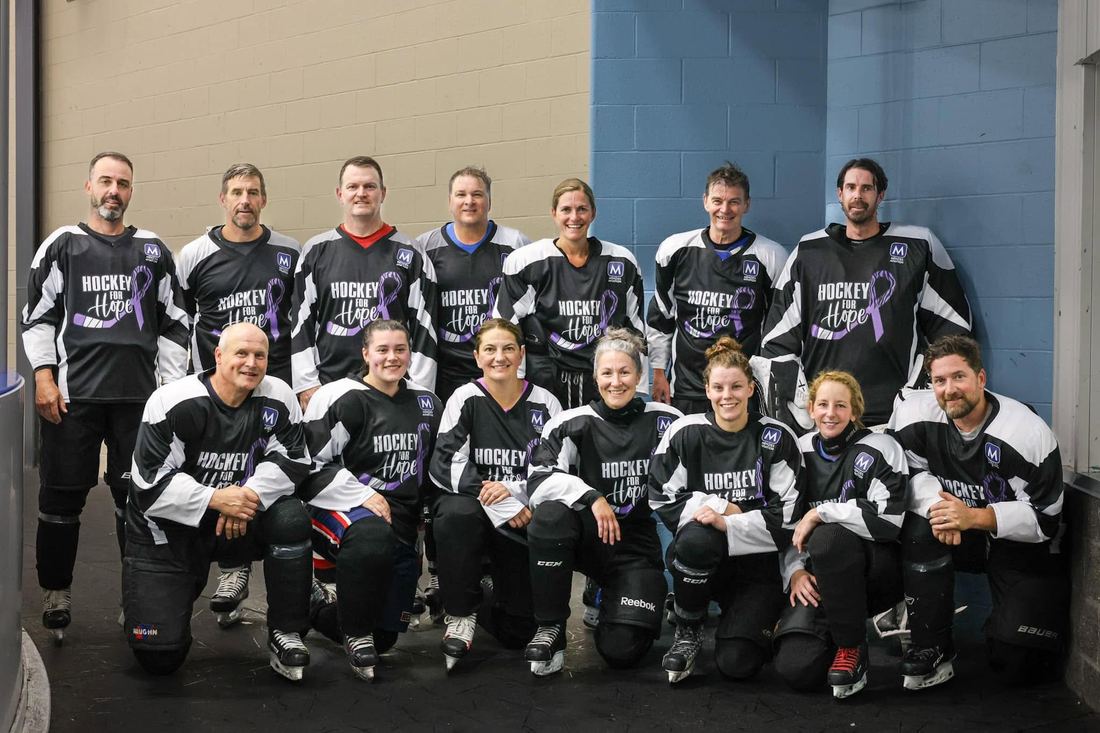
Volunteers and players in Hockey for Hope jerseys gathered for a group photo

Refill the fund

Any amount reaches a patient

Donations run through the QEII Foundation page, which issues the tax receipt. Roughly a thousand dollars covers one patient's grant in full.